Struggling to Start with Chatbots? These 5 Tools Make Marketing Automation Easier
Published On January 23, 2026

Summary
- Choosing the right chatbot tool depends on your primary marketing goal, whether it's lead generation, customer support, or user engagement.
- This guide reviews five beginner-friendly platforms: SendPulse (all-in-one), TARS (conversion-focused), Verloop (support), Landbot (creative), and Flow XO (integrations).
- A successful strategy involves not just generating leads with a chatbot, but also effectively managing the high-value conversations that follow on platforms like LinkedIn.
- To prevent losing qualified leads, use a tool like Kondo to organize your LinkedIn inbox with labels, reminders, and CRM sync, ensuring no opportunity falls through the cracks.
Getting started with chatbot marketing often feels harder than it should. You're staring at multiple tabs comparing different platforms, worried about AI tools that might hallucinate or give false information, and wondering if you'll need to double-check everything they produce.
If you're overwhelmed by the sheer number of options out there, you're not alone. Marketing beginners typically worry about three critical questions:
- How fast can I actually launch something that works?
- Will this chatbot genuinely support my campaigns, or just add complexity?
- Can I understand what's working without digging through confusing dashboards?
The good news is that modern chatbot builders are specifically designed to lower these barriers and guide users step-by-step. In this article, we'll explore five chatbot tools that stand out for beginners, with a special focus on how their features support real marketing workflows from day one.
SendPulse: The All-in-One Marketing Hub
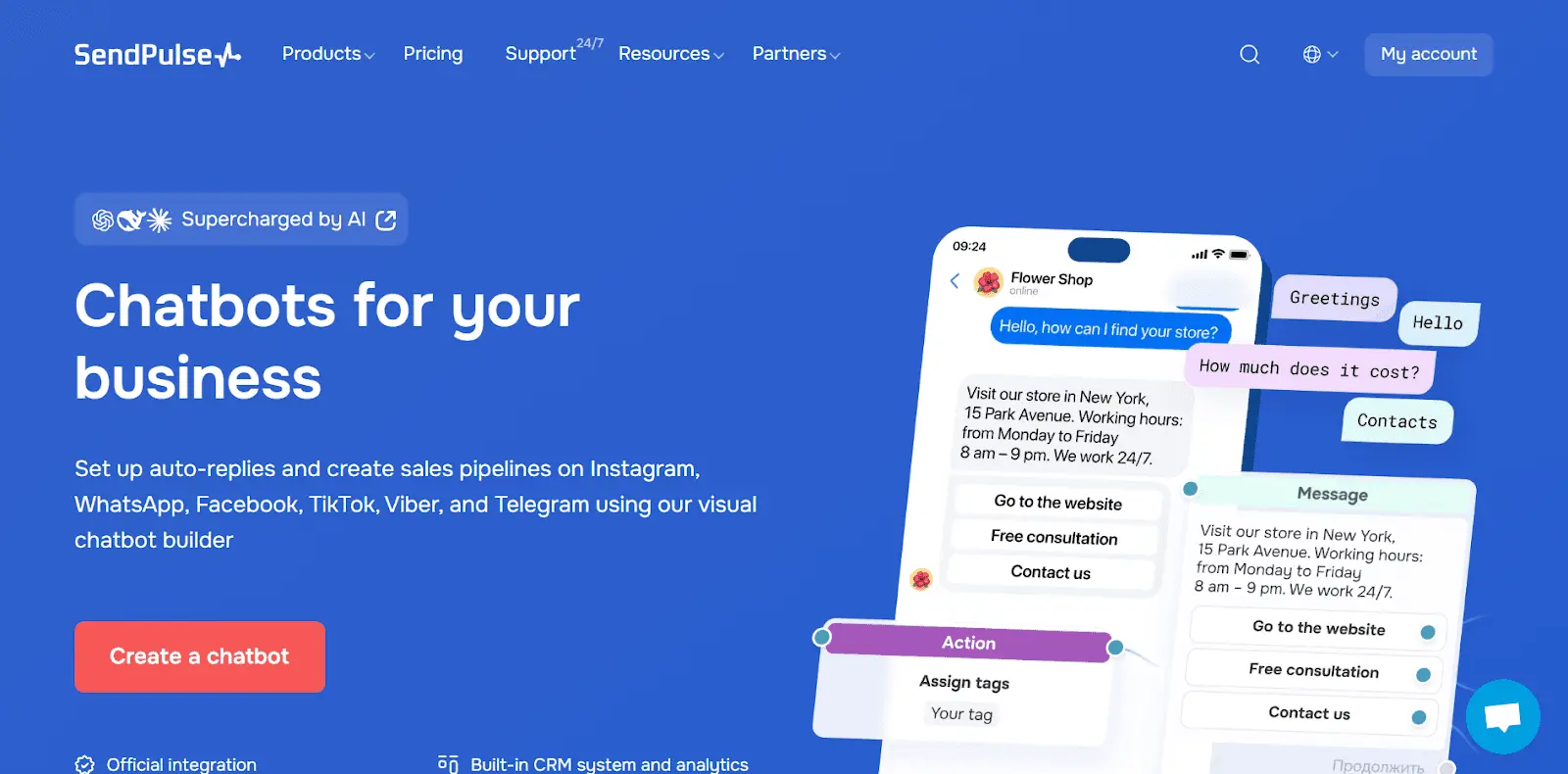
SendPulse is best suited for marketers who want one place to manage conversations, campaigns, and automation without technical complexity. Its core marketing approach centers on guiding beginners from their first chatbot setup to measurable conversions, all within a single ecosystem.
A beginner's journey with SendPulse typically starts with its website chat widget and multichannel support, allowing marketers to deploy chatbots across channels such as Facebook Messenger, Instagram, and WhatsApp Business API. With SendPulse, your WhatsApp chatbot supports leads, answers questions, and helps close more deals through WhatsApp.
The visual flow builder introduces automation in a logical way, using drag-and-drop blocks, conditions, and loops that mirror how marketers think about funnels. Templates help new users get started quickly, especially when building lead generation or FAQ-style flows. As conversations grow more advanced, reusable blocks allow marketers to maintain consistency without rebuilding flows from scratch.
SendPulse also supports tags and custom variables early in the journey, helping beginners organize contacts and personalize messages without writing code. As users move deeper into automation, its built-in CRM-style contact management, segmentation tools, and event-based triggers connect chatbot actions with broader campaigns.
Pricing:
- Free plan: 10,000 messages, 3 chatbots, 500 subscribers, 10 variables, 10 chatbot triggers, unlimited flows, and premade chatbot flow templates
- Paid plans: Start from $8/month for 500 subscribers, unlimited chatbots and live chats, advanced features, unlimited messages per month, triggers and flows, variables, contact tags, teamwork tools, and the ability to accept payments
TARS: The Conversion-Focused Specialist
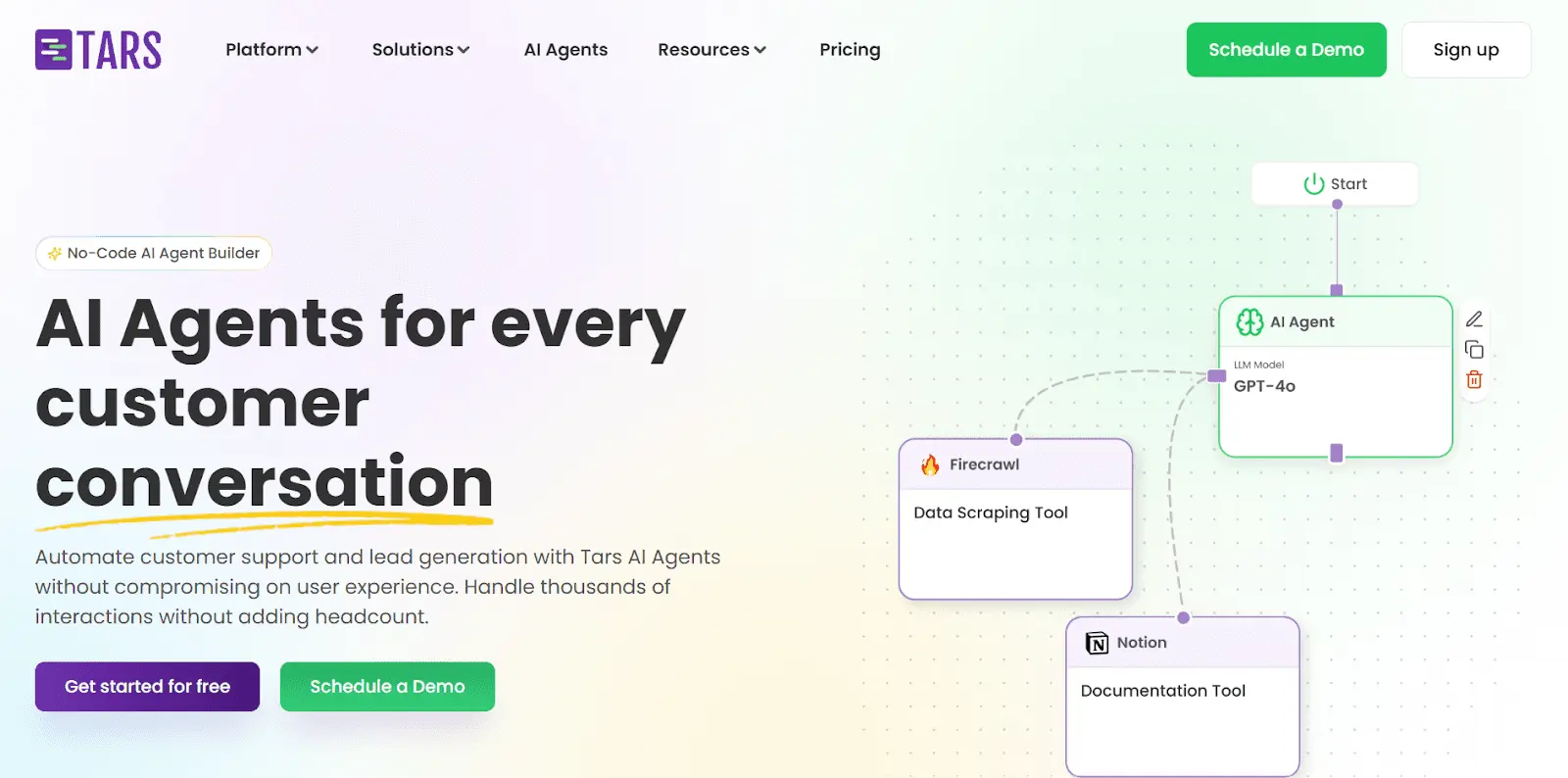
TARS is a strong fit for marketers who focus heavily on lead generation and conversion-driven campaigns. Its marketing approach revolves around replacing static landing pages with conversational experiences that guide users toward action. For beginners, TARS feels structured and goal-oriented, which can be reassuring when learning chatbot marketing for the first time.
The onboarding experience with TARS begins with its conversational landing page concept, where users build chatbots designed to capture leads directly on websites. The visual flow builder supports conditional logic and branching, allowing beginners to guide visitors based on responses. Templates are tailored toward marketing use cases like lead qualification, surveys, and appointment booking.
What sets TARS apart is its focus on conversion optimization. Custom fields and variables help store user data as conversations progress, while calendar integration enables meeting booking directly inside the chat, reducing friction for sales-focused teams.
As marketers refine their bots, TARS supports integration with popular CRMs and marketing tools, ensuring captured leads flow into existing systems. The platform allows human handoff when needed, making it easier to manage complex inquiries.
Pricing:
- Free plan: 50 conversations per month, basic LLM models, and training limit of 5 knowledge bases
- Paid plan: Start from $499/month for 500 conversations, advanced LLM models, training limit of 20 knowledge bases, live chat support
Verloop: Bridging Marketing and Support
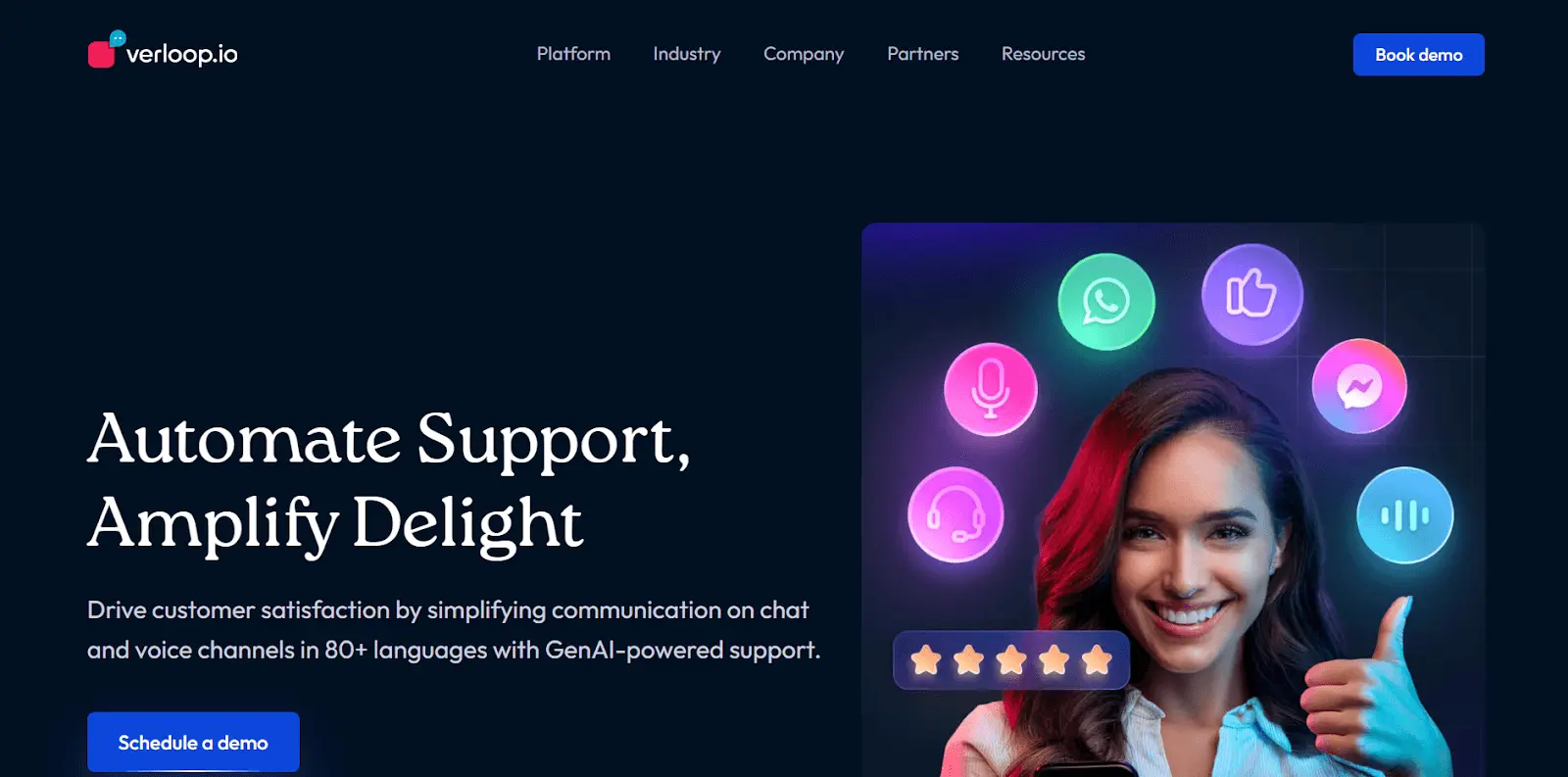
Verloop is best suited for teams that want to combine marketing automation with strong conversational support experiences. Its core approach emphasizes structured conversations that handle both lead generation and customer queries at scale. Beginners who expect higher conversation volumes or plan to involve human agents early will appreciate its emphasis on collaboration.
The beginner journey with Verloop often starts with deploying a website chat widget that handles common questions and captures leads. The platform's flow builder supports conditional logic and reusable components, helping marketers design structured conversations. What makes Verloop particularly valuable is its AI-driven FAQ and semantic search capabilities that help chatbots respond accurately to user intent without hallucinating or providing false information.
Verloop's unified inbox becomes central to the workflow as usage grows, allowing human agents to take over conversations seamlessly. Role-based access and collaboration tools support team-based management. Analytics dashboards provide insights into resolution rates, conversation outcomes, and funnel performance, making it easier to understand what's working without technical expertise.
Pricing:
- Free plan: A demo available
- Paid plan: Contact customer support for further details
Landbot: The Creative and Visual Storyteller
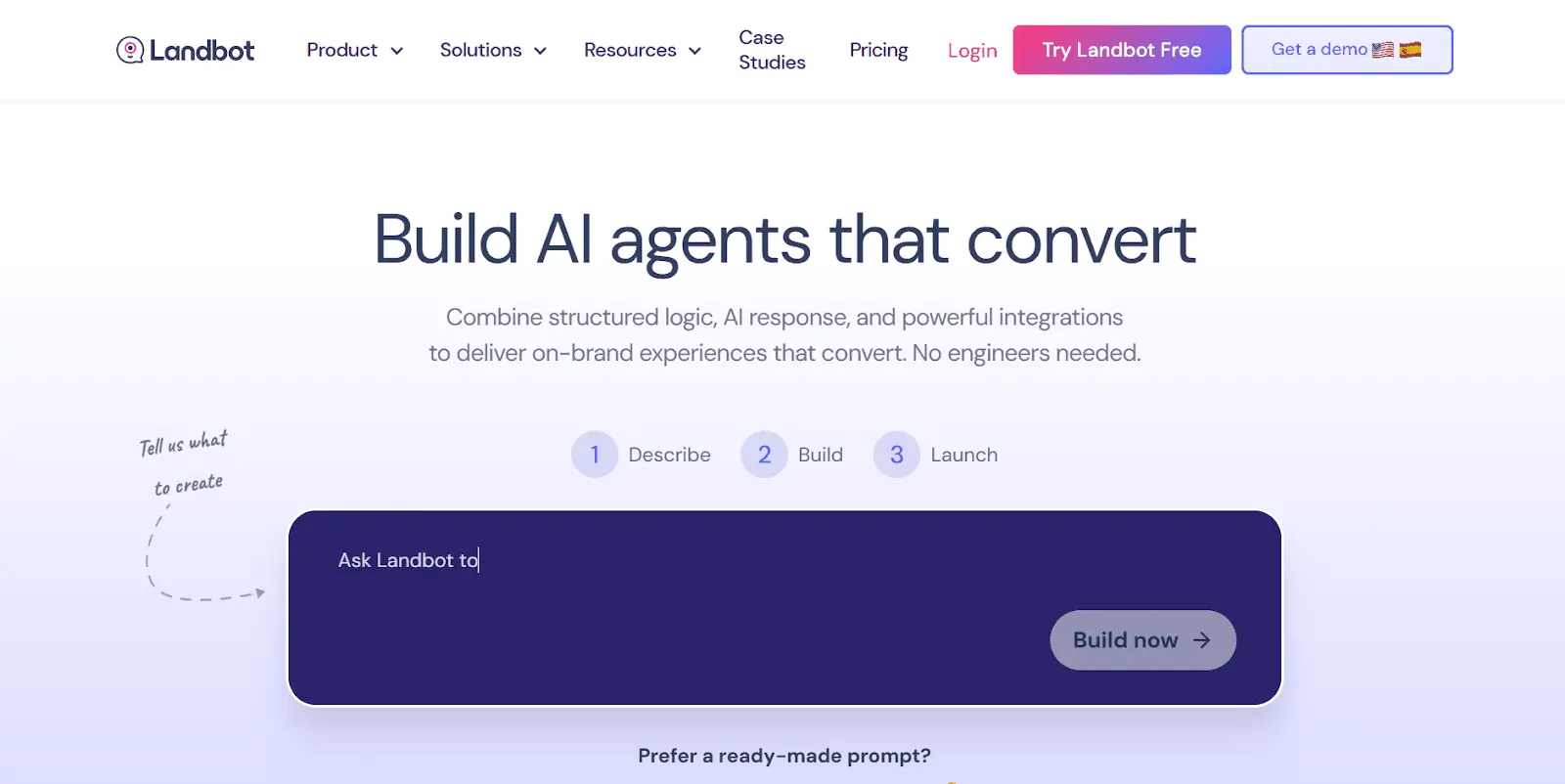
Landbot is ideal for marketers who value visual storytelling and interactive experiences. Its marketing approach centers on creating engaging, conversational flows that feel natural and intuitive. Beginners often appreciate Landbot's design-first mindset, which reduces intimidation when building their first chatbot.
Landbot introduces users to chatbot building through a highly visual drag-and-drop editor that mirrors user journeys step by step. Website chat widgets and landing page bots allow quick deployment without complex technical setup. Templates support common marketing goals like lead generation and feedback collection, while variables and conditional logic help personalize conversations without technical knowledge.
What stands out about Landbot is how it focuses on funnel progression and user drop-off points in its analytics, helping beginners easily identify where to improve their flows. The platform also supports calendar booking and integrations that enable follow-up actions, making it a complete solution for conversation-driven marketing.
Pricing:
- Free plan: 100 chats monthly, 1 seat, and basic flow operations
- Paid plan: Start from €32/month for 500 web and messenger chats, 100 AI chats, and 2 seats
Flow XO: The Flexible Integrator
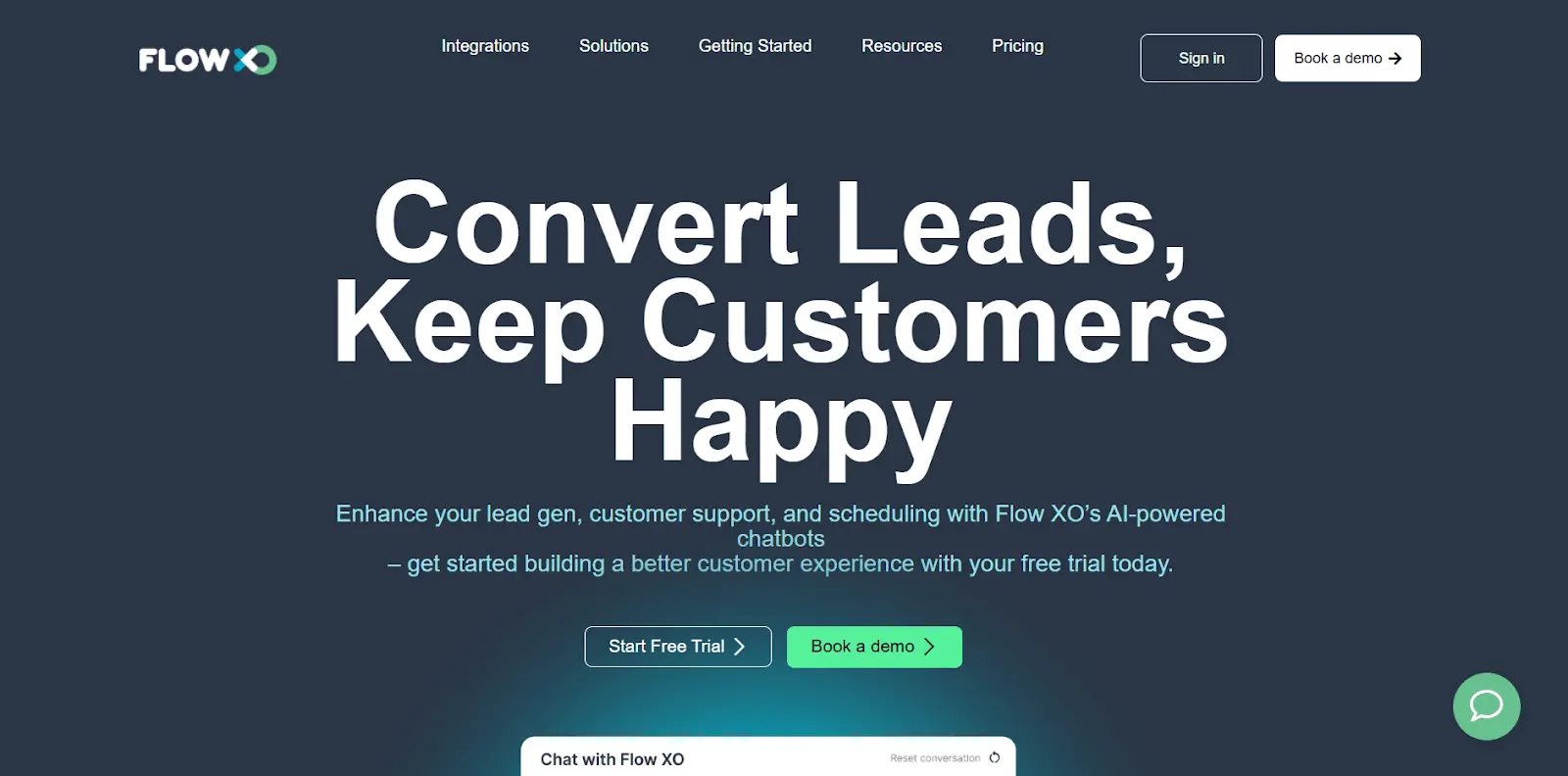
Flow XO works well for marketers who want flexibility and integration-driven automation. Its core approach emphasizes connecting chatbots with a wide range of external tools to support marketing workflows. Beginners who are comfortable exploring integrations will find it rewarding, as it balances visual flow design with functional depth.
The onboarding journey starts with building bots for websites and messaging platforms using a visual flow editor. Conditional logic, variables, and triggers help structure conversations around user actions. Templates provide a starting point for common use cases. What truly sets Flow XO apart is its powerful integration capabilities with third-party apps, allowing marketers to automate tasks like lead storage and notifications.
As usage expands, Flow XO supports analytics for conversation performance and funnel outcomes, helping you understand exactly what's working in your automation strategy. While the learning curve is slightly higher than some other platforms, Flow XO offers beginners a flexible foundation for long-term chatbot marketing that can grow with your needs.
Pricing:
- Free plan: 100 interactions, 5 bots or active flows, and 2 weeks of logs
- Paid plans: Start from $25/month for 5,000 interactions, 15 bots or active flows, and 5 team members
Beyond the Website: Managing High-Value Conversations After Lead Generation
While these chatbot tools excel at automating conversations on your website and social channels, many high-value B2B conversations ultimately move to LinkedIn, where your chatbot can't follow. After your automation has successfully qualified a lead, you need to ensure those critical conversations don't get buried in your LinkedIn inbox.
This is where many opportunities are lost. The native LinkedIn messaging experience makes it easy to miss important messages from leads, clients, or candidates, buried under a deluge of notifications and less important chats. For teams using chatbots to generate leads that then move to LinkedIn for sales conversations, this disconnect can undermine your entire marketing automation strategy.
Kondo tackles this challenge by transforming the LinkedIn messaging inbox into a streamlined, high-speed communication hub. Think of it as 'Superhuman for LinkedIn' – a way to ensure that the leads your chatbot generates never fall through the cracks.
For marketers who've invested in chatbot automation, Kondo offers several key features that complete your conversation workflow:
- Labels & Split Inboxes: Categorize LinkedIn conversations with custom labels like "Hot Lead" or "Candidate" and view them in separate, prioritized inboxes. This ensures that high-value leads generated by your chatbots are instantly visible and never get lost.
- Reminders (Snooze): When a lead says "follow up next week," set a reminder with the 'H' shortcut. The message disappears and resurfaces at the top of your inbox exactly when needed, ensuring timely follow-ups without relying on external tools.
- CRM & System Sync: For business users, Kondo integrates with tools like HubSpot, Salesforce (via Zapier/Make), Google Sheets, or Notion. This logs LinkedIn activity automatically, providing crucial visibility into the complete customer journey that started with your chatbot.
By implementing this workflow between your website chatbot and LinkedIn inbox, you create a seamless experience where no conversation falls through the cracks – from the first automated interaction to the final conversion.
From Automation Anxiety to Actionable Strategy
Each of these chatbot building tools offers a clear path for marketing beginners, from first deployment to measurable results. SendPulse excels as an all-in-one marketing hub, TARS converts through conversational landing pages, Verloop bridges marketing and support with strong collaboration features, Landbot emphasizes visual engagement, and Flow XO provides flexibility through integrations.
The key is choosing a tool that matches your specific goals rather than getting overwhelmed by feature comparisons. Start by defining what success looks like for your business:
- Are you primarily focused on lead generation?
- Do you need to qualify prospects before sales conversations?
- Is customer support a major component of your strategy?
Once you've clarified your objectives, select the platform whose strengths align with those goals, and start with a simple flow before expanding. Remember that chatbot marketing is most effective when it's part of a holistic communication strategy that includes managing high-touch channels like LinkedIn with tools like Kondo.
By taking this structured approach, you'll transform the initial anxiety about chatbot marketing into a clear, actionable strategy that delivers real results for your business – all without getting lost in technical complexity or feature overload.
The most successful marketers understand that automation isn't about replacing human conversations – it's about starting them in the right way and ensuring they continue seamlessly across every channel where your customers engage.
Frequently Asked Questions
What is the best chatbot for a beginner?
The best chatbot for a beginner depends entirely on your specific marketing goals. There is no single "best" tool for everyone. For instance, if you need an all-in-one marketing platform, SendPulse is an excellent choice. If your main focus is converting website visitors into leads, TARS is designed for that purpose. The key is to first identify your primary objective—be it lead generation, customer support, or user engagement—and then select a tool with features that directly support that outcome.
How do I choose the right chatbot tool for my business?
To choose the right chatbot tool, start by defining what a successful outcome looks like for your business. Ask yourself if your main goal is generating leads, qualifying prospects for sales, or providing instant customer support. Once you have a clear objective, evaluate platforms based on their core strengths. Look for features like a user-friendly visual flow builder, pre-built templates for your use case, and integrations with other tools you already use. Many platforms offer free plans, so you can test them before committing.
Can chatbots completely replace human customer service?
No, chatbots are not designed to completely replace human customer service. Instead, they excel at augmenting it. Chatbots are most effective at handling repetitive, high-volume inquiries, answering frequently asked questions, and qualifying leads 24/7. This frees up human agents to focus on complex, high-value conversations that require empathy and critical thinking. Most advanced chatbot platforms include a "human handoff" feature to ensure a seamless transition from bot to person when needed.
What are the most important features in a beginner-friendly chatbot builder?
For beginners, the most important features are those that lower the technical barrier and speed up the launch process. Look for a visual drag-and-drop flow builder, which allows you to map out conversations without writing code. Pre-built templates for common tasks like lead generation or FAQs are also crucial. Finally, clear and simple analytics dashboards are essential for understanding what's working and where to improve your chatbot's performance.
How do chatbots help with lead generation?
Chatbots help with lead generation by engaging website visitors proactively and conversationally. Instead of asking users to fill out a static form, a chatbot can ask qualifying questions one at a time, capture contact information piece by piece, and even book meetings directly in the chat window. This interactive process feels more personal, reduces friction, and can significantly increase conversion rates compared to traditional landing pages.
Why is it important to manage conversations after a chatbot generates a lead?
Managing conversations after a chatbot generates a lead is critical because automation is only the first step. Many high-value B2B conversations move to platforms like LinkedIn for relationship-building and sales negotiations. If those follow-up messages are missed or poorly managed, the initial lead is wasted. Using tools to organize and track these high-touch conversations ensures that qualified leads don't fall through the cracks, completing the journey from initial automated contact to final conversion.